
How To Get a Domestic Violence Restraining Order in Florida
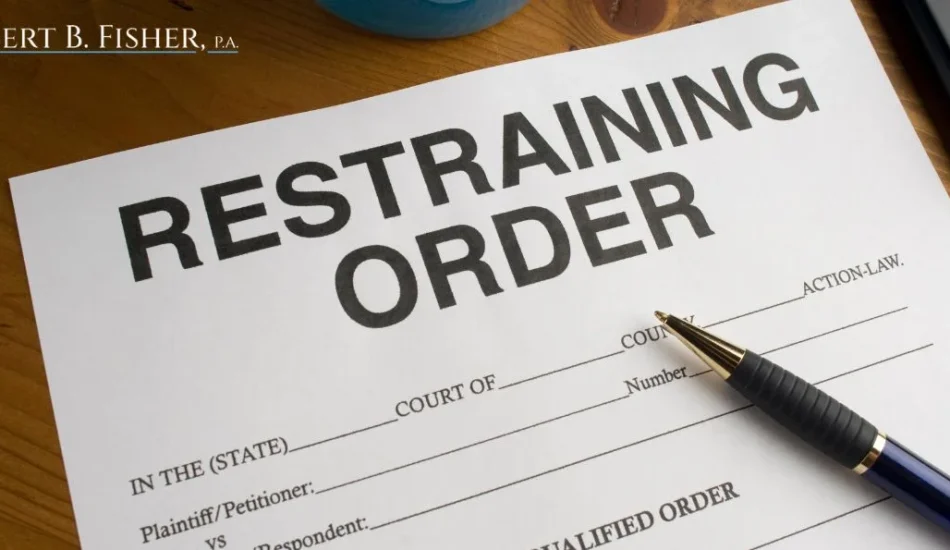
Dealing with domestic violence can be humiliating, painful, and detrimental to your physical and mental health. If you find yourself in a domestic violence situation, it can be hard to get out of it and figure out what to do next to protect yourself from further harm. A good first step is to get an order of protection against the person committing the acts of violence. A domestic violence lawyer can tell you how to get a restraining order in Florida.
The legal team led by Robert B. Fisher, P.A., can help you deal with your domestic violence situation, whether you are a victim of violence or someone accused of the offense.
Florida Domestic Violence Laws
According to information from the Florida Department of Law Enforcement, there were nearly 104,000 reported incidents of domestic violence in 2021 throughout the state. That’s a decrease of 2.5% from 2020, which saw well over 106,000 incidents of domestic violence.
Domestic violence occurs when an individual makes a threat of violence or commits an act of violence against somebody with whom they share an intimate or personal relationship. Domestic violence can take many different forms between family members or household members. For a crime to be classified as domestic violence in Florida, the victim and offender must be part of the same household or have been part of the same household in the past.
How To Get a Domestic Violence Restraining Order in Florida
If you are experiencing domestic violence or know somebody who is, you should file for a domestic violence restraining order. Having a restraining order in place can be a solid way to establish protection and have your situation on record. To get a domestic violence restraining order in place, you must take the following actions:
- Fill out the proper forms from your local courthouse. Make sure you file the right paperwork in the county where you currently reside, where the abuser resides, or where the domestic violence occurred. The circuit court clerk can assist you. Your lawyer can help you ensure everything is filled out correctly.
- File your petition with the court. A judge will review your petition and issue a temporary ex parte injunction quickly if they discover that there is a very real and immediate threat of violence to you or your family. Make sure you include all relevant details in your petition, as that will be the deciding factor that encourages the judge to issue the temporary injunction.
- Attend a court hearing. You must attend a court hearing for the injunction to become permanent. At the hearing, you must prove that your alleged abuser has committed an act of domestic violence against you and that you or your children are in immediate danger from this person. If the abuser doesn’t show up to the hearing, the court may issue a default judgment or announce another court date.
Being Accused of Domestic Violence in Florida
A domestic violence offense may be considered a misdemeanor if it is a first offense and does not result in serious injury to the victim. It may be charged as a felony if it is a repeat offense or results in serious injury to the victim.
If you are charged with domestic violence, it can cause serious damage to your life, possibly for good. If convicted, you will have a criminal record that will stay with you for the rest of your life, as a violent crime cannot be expunged in Florida. A criminal record can affect your social standing, professional reputation, and even your personal relationships.
These serious allegations can also seriously impact your mental health. You may want to consider reaching out to a local support group such as NAMI Florida. Talking to someone can help.
FAQs
Q: What Is Required to Get a Domestic Violence Restraining Order in Florida?
A: A lot of important information is required to get a domestic violence restraining order in Florida. First and foremost, the petitioner and the respondent have to be family or at least living in the same household. You will need to go to the courthouse and fill out the proper forms for the restraining order. Then, a judge will make a final determination regarding your order.
Q: How Much Does It Cost to File a Restraining Order Against Someone in Florida?
A: Generally, there is no fee to file a restraining order against someone in Florida. If you are in need of immediate legal protection from someone, you can secure an order without paying anything to the court or, in some cases, the sheriff’s office. If you decide to hire a lawyer to help with the paperwork, you will likely have to pay for their services.
Q: What Should I Say to Get a Restraining Order for Domestic Violence?
A: If you need to get a restraining order against someone for domestic violence, you should be totally honest with the court about what happened to push you to this point. Make sure you have plenty of evidence to support your claims and your request for the restraining order. The more evidence you have, the easier it can be to secure an order, even if it’s just a temporary injunction.
Q: What Are the Rules for a No-Contact Order in Florida?
A: The rules for a no-contact order in Florida are quite simple. Essentially, you are granted an injunction by the court that prohibits the person in question from contacting you in any way. This includes in-person meetings, phone calls, text messages, emails, and even written letters. If the person violates the no-contact order in any way, they could face serious legal consequences, depending on the details of the order.
Contact a Domestic Violence Lawyer Today
Robert B. Fisher, P.A., can help you work out a domestic violence restraining order or fight a domestic violence charge, depending on your needs. Contact our law firm today to speak with a valued team member and learn about how we can help your case.

Office Location
Robert B. Fisher, P.A. 1220 Commerce Park Drive
#207
Longwood, FL 32779
© 2026 Copyright Robert B. Fisher, P.A. All Rights Reserved.
Digital Marketing By 
*Images are obtained under license from Canva and other third-party stock image providers, with attribution included where required.